
MID (Macedonian Research Society) is a non-governmental organization officially accredited by UNESCO.
We explore the universe, cultural heritage and nature.
About us
The Macedonian Research Society is a non-governmental, non-profit organization that unites citizens interested in applying and promoting the principles of sustainable social development, as well as protecting the natural environment and cultural heritage.
The Society achieves its goals by carrying out research in the natural, technical and social sciences, in order to identify, record, analyze and resolve the problems of citizens and the wider community in the process of building a modern civil society.
MID’s core activity is directed at building a modern civil society by carrying out research in all fields of science, and especially in studying and resolving interdisciplinary and multidisciplinary problems.
MID – Macedonian Research Society is registered under the Law on Associations of Citizens and Foundations of the Republic of Macedonia. The founding assembly was held in 2003. According to its statute, MID carries out its activities through projects, for the implementation of which the Project Managers are responsible. Within a project, the manager forms, as needed, a team of activists, who may, but need not, be members of MID.
Projects
Ethnoastronomy
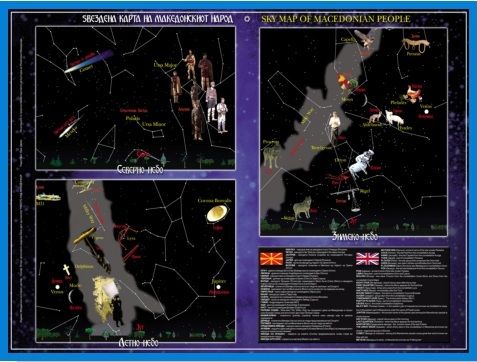
Ethnoastronomy is a project that researches folk beliefs related to the origin of the world, the celestial bodies and the sky in general, and presents them to the public.
Ethnoastronomy is a young scientific discipline on which very little work is done anywhere in the world. Things changed for the better after the United Nations declared the sky a world heritage in 2004. Within this framework, and understanding sky-related beliefs as our cultural heritage that must be saved from oblivion, the members of our Society, in the past through various forms of organization and now organized in MID – Macedonian Research Society, have continuously worked on collecting this information and presenting it to the professional and general public, at home and abroad.
Since 1982, systematic collection of folk notions about the sky and celestial bodies, the Earth, time and climate change has been carried out on the territory of the Republic of Macedonia. In a word, ethnoastronomical and ethnometeorological research is being conducted among the Macedonian people. On this subject, the only book in this field so far, “The Sky over Macedonia” by Gjore Cenev, was published in 2004. Considering that the cosmogonic myths and rituals of the Macedonian people were recorded in written form for the first time, and that until now they had been passed down from generation to generation orally, it is surprising that they survived for so long. The myths about the creation of the world, about the Earth as the Mother Goddess, the Sun God and the solar mountain, the Moon that descends to Earth and turns into a cow, the representation of the months as deities, the original division of the sky into constellations, etc., have nothing in common with the existing Christian religion of the population.
The very fact that they survived among the people despite various conquerors, such as the ancient Romans and Turks who ruled these lands for hundreds of years, or despite the influence of various religions such as the Roman, Islamic and Christian ones, speaks of their vitality and deep rootedness in the collective consciousness of the people.
The original information in this book, as well as in all other sources, can serve for further anthropological analysis, both of the Macedonian people and for comparative analyses with other peoples of the world.
Archaeoastronomy
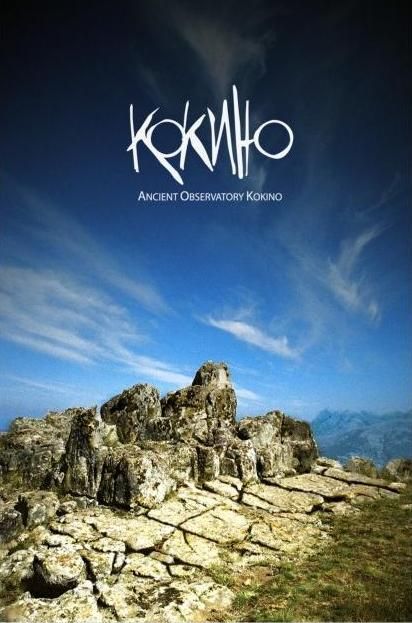
The Archaeoastronomy project involves research on the Kokino megalithic observatory, as well as the discovery of other archaeological sites with astronomical content.
To this end, in cooperation with the Planetarium at the Youth Cultural Center in Skopje, MID formed teams for logistical support of the research and popularization of the ancient Kokino observatory. These efforts were crowned by Kokino being placed by NASA in a prestigious fourth place on its list of ancient solar observatories.
As a result of these activities, in 2005 MID, in cooperation with the National Institution “Tumba” – Kumanovo, the Institute for Protection of Cultural Monuments – Kumanovo and the Ministry of Culture, published the first catalogue of Kokino, as well as flyers and postcards of the site. At the end of 2005, in cooperation with the Ministry of Culture and the weekly Tea Moderna, two wall calendars and office supplies illustrated with motifs from this ancient observatory were printed.
In cooperation with the Ministry of Culture of the Republic of Macedonia, postcards with photographs of Kokino were also published. In cooperation with the Philatelic Bureau of Macedonian Post, the first postage stamps with Kokino motifs were issued. One stamp shows the moment of sunrise at the ritual marker, observed from the main ritual position on the stone thrones, while the second shows a mold for casting a bronze amulet found at the Kokino site.
Together with the Association of Tourist Guides of the Republic of Macedonia and the Association of Tourist Guides of Ohrid, training for tourist guides on presenting the Kokino megalithic observatory was held. 35 licensed tourist guides attended the two sessions. By agreement with the Toyota Representative Office in the Republic of Macedonia, field recordings were made to produce promotional photo material with Kokino motifs.
In 2006 the Embassy of the United States of America in the Republic of Macedonia awarded a grant for the creation of a website for the Kokino megalithic observatory. During 2007, MID, in agreement with the Planetarium at the Youth Cultural Center in Skopje, provided logistical support for the geodetic measurements needed to create a three-dimensional map of the Kokino site. The same year, MID, in cooperation with the Aviation Wing of the Army of the Republic of Macedonia, carried out aerial photography of Kokino on two occasions. In 2008 and 2009, research and archaeoastronomical analysis of several locations in northeastern Macedonia were carried out with the Planetarium at the Youth Cultural Center in Skopje.
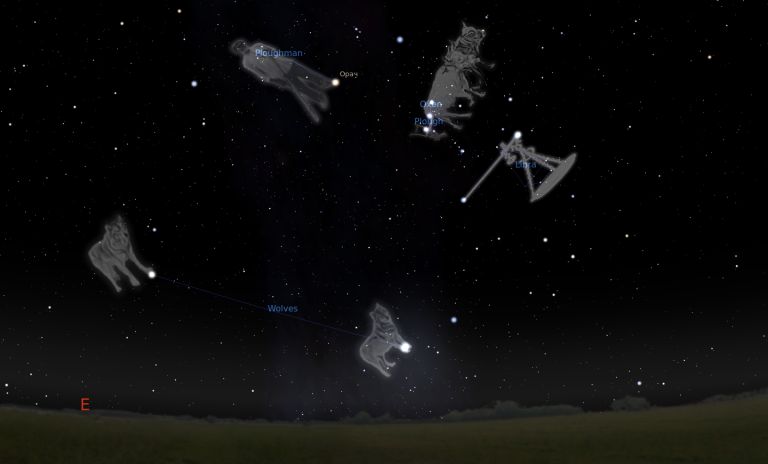
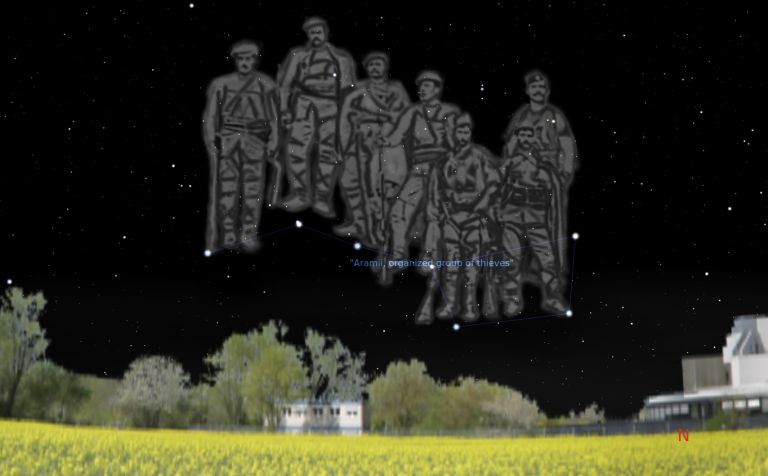
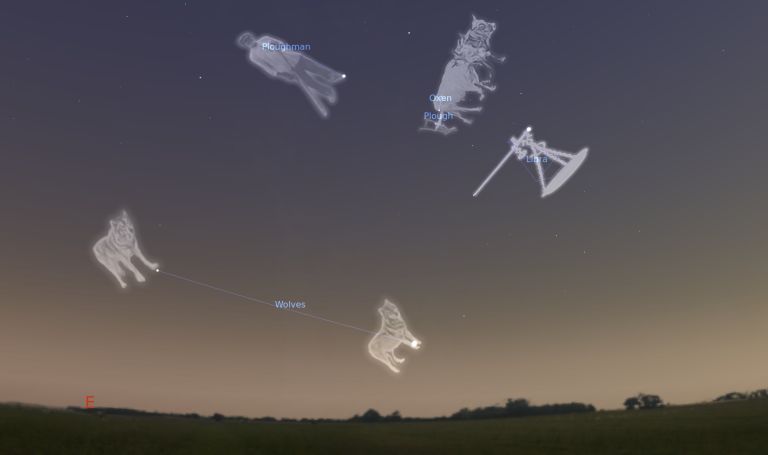
Macedonian Constellations in Stellarium
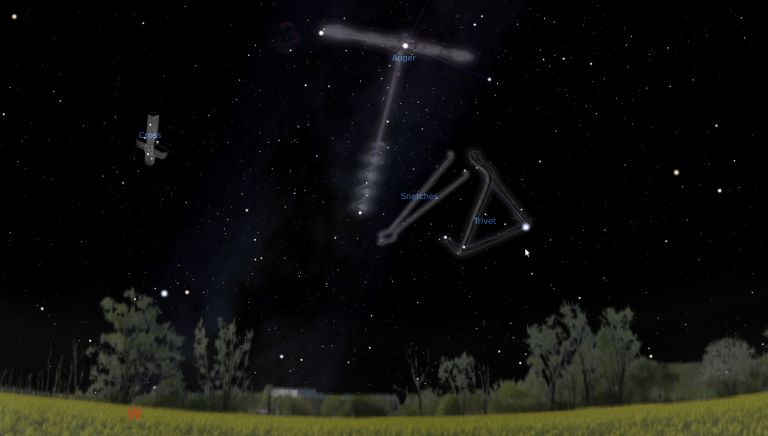
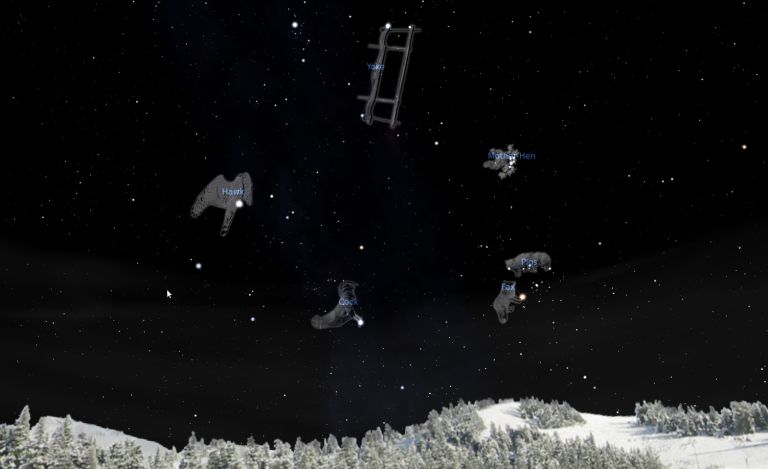
MID – Macedonian Research Society, with the support of the Ministry of Culture of the Government of the Republic of Macedonia, created an add-on for the free software Stellarium.
From now on you can get to know the Macedonian constellations and their position in the sky with the help of this software.
Go to the website stellarium.org and download the latest version of Stellarium for your operating system.
Install Stellarium on your computer. The software is free to use. You can find the Macedonian constellations in the popup menu on the left, Sky and viewing options window >> Sky Culture.
Vselena Magazine
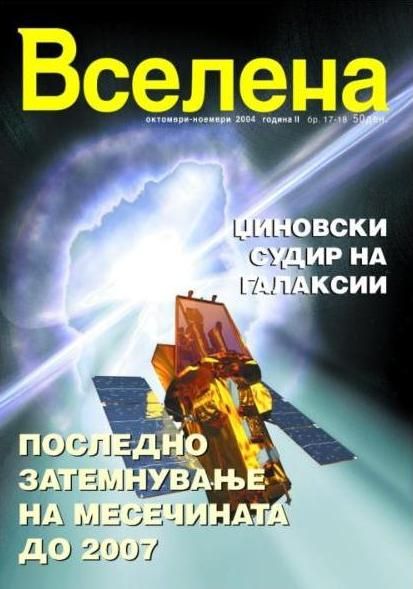
The magazine “Vselena” (“Universe”) is the only magazine popularizing astronomy published in the Macedonian language.
Its main goal is to fill the gap in our education system caused by this natural science not being taught in primary and secondary education. As a consequence, there is widespread unfamiliarity with, and lack of understanding of, the modern achievements in astronomical research, which are considered worldwide to be a driving force of overall civilizational development. To somewhat narrow the intellectual gap that separates us from the developed world, MID has so far published 20 issues of the magazine “Vselena”, in which regular sections explain, in a popular way, both basic concepts and the latest findings of this fascinating natural science.
UV Radiation
MID runs the environmental project called UV Radiation, in which, through cooperation with the Ozone Layer Protection Office at the Ministry of Environment and Physical Planning, it works on popularizing the problem of increased ultraviolet radiation, as well as on recommendations for appropriate behavior during periods when the index of this radiation is highest.
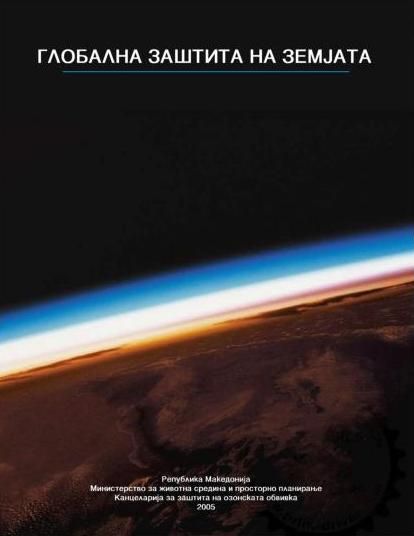
There is no institution in our country that deals specifically with this problem. To somewhat fill this information gap, MID, in cooperation with the Ozone Layer Protection Office, published the brochures “UV Radiation – Dangers and Prevention” and “Global Protection of the Earth”.

Kujundzija
What is a kujundzija? Is it the same as a jeweler?
Kujundzija craftsmanship (traditional goldsmithing) is an art with deep roots in Macedonian culture and tradition. This craft involves making jewelry and other decorative objects from precious metals such as gold, silver and copper.
- Kujundzijas traditionally make fine handcrafted pieces from precious metals such as gold and silver, but also from copper or other metals.
- The focus is often on decorative objects, such as handmade jewelry, home decorations, items for religious or cultural rituals, and decorated vessels.
- The techniques kujundzijas use are usually artisanal and traditional, including engraving, artistic forging and fine carving.
Why it is good to learn the kujundzija craft
- Less money is needed to start your own business, because the work is based on handcrafting with traditional tools. There is no need to invest in expensive machines at the start.
- Every product is unique, the handmade work of the master, and has greater value than mass-produced items. Most often you work with clients who know the value of kujundzija jewelry and are ready to pay appropriately for quality kujundzija jewelry.
- There is not much competition in the market, because under the influence of mass production the kujundzija craft is slowly dying out, but given the uniqueness of kujundzija jewelry, there will always be clients looking for unique jewelry.